What Are the Top Fiber Connectors for Global Buyers?

Global network expansion is changing how buyers evaluate fiber connectors. Data centers, 5G networks, and fiber-to-the-home projects demand higher density, lower insertion loss, and dependable installation. MarketsandMarkets’ recent industry forecast identifies continued growth in the fiber optic connectors market, driven by cloud infrastructure and broadband expansion. The exact forecast varies by research methodology. That uncertainty deserves attention.

LightCounting’s optical communications analyses also show strong demand from data-center upgrades and artificial-intelligence infrastructure. These systems often use compact, high-density connections, including MPO and MTP-style solutions. Meanwhile, the Fiber Broadband Association continues to document growing fiber deployment across residential and enterprise networks. These reports point toward one practical reality: connector selection affects capacity, maintenance, and long-term operating cost.

No connector wins everywhere.

Global buyers must compare more than purchase price. They should examine polish quality, ferrule alignment, return loss, insertion loss, environmental sealing, and supplier traceability. IEC 61754 interface standards and TIA-568 recommendations provide useful technical reference points, but compliance alone does not guarantee field performance. Installation skill matters. So does cleaning discipline.

In a real cabinet, a poorly protected connector can collect dust within minutes. That small failure may create intermittent links, repeated testing, and expensive downtime. SC, LC, MPO, MTP, and hardened outdoor connectors each serve different operating conditions. A careful comparison should match connector design with port density, transmission speed, climate exposure, and technician experience. Some buyer checklists still overlook serviceability. That is a weakness worth correcting.

This guide evaluates the top fiber connectors for global buyers through technical evidence, practical deployment experience, and supplier reliability. Forecasts may change, but measurable performance remains essential.

What Are the Top Fiber Connectors for Global Buyers?

Fiber Connector Basics: Types, Components, and Core Functions

Fiber connectors create a removable optical link between cables, transceivers, and network equipment.

Their core task is simple: align two fiber cores with extreme precision. Even a tiny offset can increase insertion loss and weaken the signal.

Common types include LC, SC, ST, FC, and MPO connectors.

LC connectors
suit dense panels because their small housings save space.
SC connectors
offer a larger push-pull design, which many technicians find easier to handle.
ST connectors
use a twist-lock structure.
FC connectors
provide strong threaded retention.
MPO connectors
join multiple fibers in one interface, supporting high-density data links.

The ferrule holds the fiber end.

Ceramic ferrules usually provide stable alignment, although material quality still matters. Inside the adapter, an alignment sleeve keeps two ferrules centered.
The connector body protects the assembly, and the latch or thread prevents accidental separation. A boot reduces bending near the cable exit.

Cleanliness is critical.

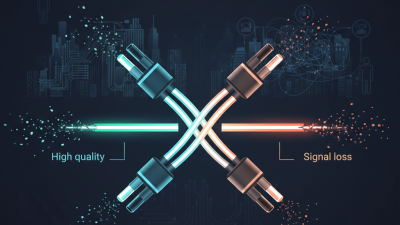
A barely visible dust particle may cause reflection, signal loss, or permanent end-face damage.

In field installations, technicians should inspect, clean, and inspect again before testing. Measure insertion loss and return loss, rather than trusting appearance alone. Polarity also deserves attention in MPO systems. One reversed fiber row can disable an otherwise correct link.

IEC connector standards help buyers compare mechanical interfaces, but compatibility is not guaranteed by shape alone.

Fiber mode
Polishing style
Cable diameter
Equipment requirements

Fiber mode, polishing style, cable diameter, and equipment requirements must match. This is where purchasing decisions become less obvious.

The cheapest connector may become expensive after repeated cleaning, retermination, or troubleshooting.

How to Compare Fiber Connectors by Performance and Compatibility

For global buyers, connector selection starts with the link, not the catalog. Compare insertion loss, return loss, mating durability, and operating temperature. In field testing, a connector with low insertion loss can still fail in a dense rack. Poor polarity control or weak strain relief may create expensive rework. LC connectors suit high-density panels, while SC connectors offer a larger, easier-to-handle body. MPO-style multi-fiber connectors save space, but they demand careful polarity and end-face inspection. No connector wins every installation.

Compatibility requires more than a matching shape. Confirm fiber type, core size, polish geometry, adapter alignment, and transceiver requirements. Single-mode links often require APC or UPC choices based on system design. Mixing polished surfaces without verification can increase reflection and reduce stability. Check keying, latch clearance, cable bend radius, and cleaning procedures before purchase. Standards documents and test reports should support every claimed value. Ask for measured insertion-loss data, not only typical figures. I have seen a small cost saving become a long troubleshooting session. That result is avoidable, but not always.

Tips: Build a comparison sheet with loss, reflection, density, environment, and mating cycles. Test sample assemblies before volume orders. Inspect end faces at receiving. Keep spare adapters for field repairs. If two options look equal, choose the one with clearer documentation and simpler maintenance.

What Are the Top Fiber Connectors for Global Buyers?

Comparing representative maximum insertion-loss values helps buyers evaluate optical performance. Lower insertion loss generally indicates less signal attenuation. Values may vary by connector grade, polish type, fiber mode, and test method.

Compatibility Guide

Connector Type Common Fiber Count Typical Fiber Support Typical Use
LC 1 per ferrule; duplex via clip Single-mode and multimode High-density data-center patching
SC 1 per ferrule; duplex via adapter or clip Single-mode and multimode Telecommunications and access networks
ST 1 per ferrule Single-mode and multimode Legacy LAN, industrial, and premises systems
MPO-12 12 fibers Ribbon single-mode and multimode assemblies Parallel optics and structured cabling
MPO-16 16 fibers Ribbon single-mode and multimode assemblies Higher-density parallel optical links

Buyer note: Connector geometry, keying, gender, end-face polish, adapter type, and fiber mode must match across the complete link. A lower insertion-loss specification should not be evaluated separately from return loss, cleaning requirements, polarity, and installation density.

Top Fiber Connector Types for Different Global Network Applications

Global network applications need different fiber connector types, not one universal answer. The ITU’s Facts and Figures 2023 reported 5.4 billion people online, increasing pressure on access and backbone infrastructure. For data centers, MPO connectors support high-density parallel links and faster equipment installation. Duplex LC connectors suit server connections, patch panels, and compact cross-connects. They save rack space, though cleaning becomes less convenient.

SC connectors remain practical in broadband access networks because their push-pull design is easy to handle in field cabinets. Single-mode fiber usually serves long-distance links, while multimode fiber fits shorter data-center connections. The Fiber Broadband Association’s 2024 report showed continuing global fiber expansion, making connector durability important beyond indoor racks. Outdoor deployments may require hardened connectors with sealed bodies and stronger pull resistance. Small details matter. Dust caps often fail first.

For high-loss-sensitive systems, angled physical-contact connectors can reduce back reflection and protect signal quality. However, they may increase procurement complexity and cleaning requirements. The choice is rarely perfect. A connector that works well in a controlled data center may perform poorly in a wet street cabinet. Buyers should compare insertion loss, return loss, mating cycles, polarity options, and field-service conditions. The Fiber Optic Association recommends inspection and cleaning before every connection, but real maintenance teams sometimes skip this step under pressure. That weakness deserves attention. A lower-cost connector can become expensive after repeated troubleshooting, especially when network downtime affects thousands of users.

What Are the Top Fiber Connectors for Global Buyers? - Top Fiber Connector Types for Different Global Network Applications

Connector Type Ferrule / Fiber Format Typical Fiber Compatibility Typical Insertion Loss* Common Network Applications Main Advantages Important Buying Considerations
LC 1.25 mm ceramic ferrule; simplex or duplex Single-mode and multimode fiber About 0.15–0.30 dB Data centers, high-density patch panels, enterprise networks, telecom access equipment, duplex transceivers Compact footprint, high port density, push-pull style latching, widely used on duplex optical transceivers Verify polarity, latch orientation, fiber type, and whether UPC or APC end faces are required
SC 2.5 mm ceramic ferrule; simplex or duplex Single-mode and multimode fiber About 0.20–0.35 dB Telecom distribution frames, fiber-to-the-home deployments, access networks, structured cabling, testing equipment Simple push-pull operation, robust housing, easy field handling, good availability across international markets Requires more panel space than compact connectors; confirm adapter type and APC/UPC compatibility
MPO Multi-fiber ferrule; commonly 8, 12, or 24 fibers Single-mode or multimode ribbon and parallel fiber assemblies About 0.20–0.50 dB per mated connection, depending on grade and fiber count Data-center backbone links, parallel optics, high-speed server interconnects, trunk cables, modular cross-connect systems Fast multi-fiber deployment, reduced cable volume, efficient migration to parallel and duplex transmission architectures Polarity, keying, pin configuration, fiber count, cleaning, and end-face inspection are critical; insertion loss must be budgeted carefully
SC/APC 2.5 mm angled-polish ceramic ferrule; simplex or duplex Primarily single-mode fiber About 0.20–0.35 dB Fiber-to-the-home access, passive optical networks, outside-plant distribution, radio-over-fiber links Angled end face reduces back reflection, which is useful for analog and bidirectional access systems APC and UPC connectors must not be mated together; green APC identification is commonly used, but specifications should be checked
FC 2.5 mm ceramic or metal ferrule; threaded coupling Mainly single-mode fiber; also available for multimode systems About 0.20–0.35 dB Measurement instruments, long-haul telecom, vibration-sensitive installations, legacy optical systems Threaded coupling provides secure retention and good resistance to vibration or accidental pulling Slower to install than push-pull designs and requires more space; confirm key alignment and polish type
ST 2.5 mm ceramic ferrule; bayonet coupling Single-mode and multimode fiber About 0.20–0.40 dB Legacy enterprise networks, industrial control systems, premises cabling, educational and laboratory installations Secure bayonet locking, straightforward installation, and strong compatibility with older network infrastructure Less suitable for new high-density deployments; check panel cutouts, coupling style, and available replacement parts
CS Compact 1.25 mm ferrule; duplex format Single-mode and multimode fiber About 0.20–0.35 dB High-density data-center switches, next-generation transceiver interfaces, compact patching environments Smaller than traditional duplex connectors and designed to support high port density with convenient duplex handling Confirm equipment receptacle compatibility, polarity method, latch design, and regional availability
SN Two 1.25 mm ferrules in a compact duplex assembly Single-mode and multimode fiber About 0.20–0.35 dB Very-high-density data centers, switch-to-switch links, structured cabling modules, space-constrained patching Supports compact duplex and two-circuit connectivity while using a small panel footprint Check module and adapter compatibility, polarity configuration, cleaning access, and availability of compatible patch cords
Notes: Insertion-loss values are typical planning ranges for clean, correctly installed, single-mated connections. Actual performance depends on connector grade, end-face geometry, fiber type, polishing quality, alignment, contamination, and test method. UPC and APC connectors are not interchangeable for mating. Always confirm the applicable IEC, TIA, or installation specification before purchasing.

Standards, Installation Methods, and Quality Checks for Buyers

Global buyers often compare LC, SC, and MPO connectors, but shape alone does not prove suitability. Connector selection should match the network standard, fiber type, density, and maintenance plan. IEC 61754 helps define connector interfaces, while IEC 61300 series methods support performance and environmental testing. Buyers should also confirm whether the system uses single-mode or multimode fiber, and whether polished ends are APC or UPC. Never mix them casually.

Small details matter. Technicians should inspect and clean every end face before connection, using approved lint-free tools and inspection equipment. Dust can increase insertion loss within seconds. Installation teams must respect the specified bend radius, connector keying, polarity, and pulling limits. For high-density MPO links, polarity verification deserves extra attention because one reversed array can disrupt an entire link. It happens.

Quality checks should include insertion loss, return loss, end-face condition, ferrule alignment, pull strength, and repeated mating performance. Buyers should request test reports linked to batch numbers, product drawings, material information, and environmental ratings. Sample testing is useful, but it cannot replace process audits or field trials. A connector may pass in a laboratory and still fail during rushed installation. That risk deserves honest review.

Suppliers should explain their inspection equipment, calibration schedule, acceptance limits, and packaging controls. Check moisture protection and dust caps, especially for long-distance shipments. Reliable purchasing is not only about a low unit price. It depends on traceable records, consistent manufacturing, and technicians who can reproduce the specified installation method.

How to Select Reliable Fiber Connectors for International Purchasing

Global buyers need more than a familiar connector name. The right choice depends on density, network speed, installation conditions, and maintenance habits. The OECD Broadband Statistics report, published in 2024, showed that fiber represented over 40% of fixed broadband connections across reporting economies. Demand is growing. Small quality differences now affect large deployments.

LC connectors suit dense panels and short data-center links. SC connectors remain practical for field handling and legacy networks. Multi-fiber push-on connectors reduce rack space, but polarity errors can delay commissioning.

Check IEC 61754 interface requirements and IEC 61300 performance tests before approving a supplier. Request insertion-loss and return-loss data, not only catalog promises. A clean endface matters. So does consistent ferrule geometry.

International purchasing requires deeper verification. Ask for batch traceability, inspection records, material details, and samples from different production lots. Verify operating temperature, vibration resistance, cable diameter, and adapter compatibility. A connector rated for an indoor cabinet may fail in a humid roadside enclosure. The ITU Facts and Figures 2024 report estimated 5.5 billion people were online, increasing pressure on dependable network expansion.

Procurement teams often focus too heavily on unit price. That is a mistake. A cheaper connector can create polishing failures, contamination, and repeated labor costs. Even experienced buyers may overlook polarity documentation. Recheck it. Reliability is not proven by appearance; it is demonstrated through standards, testing, and controlled field performance.

x